
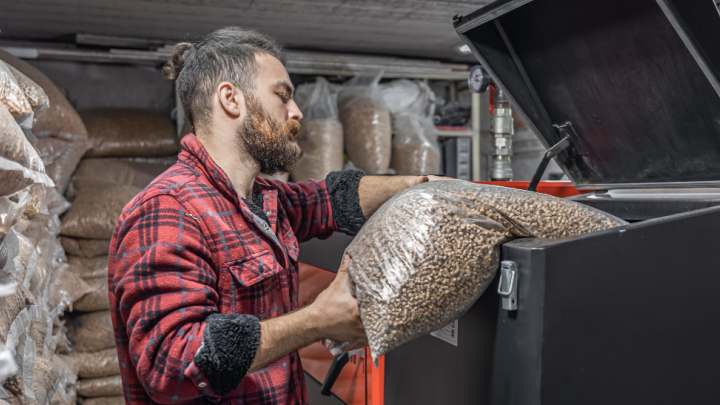
FOR WHICH TYPE OF USE IS THE 15 KG PACKAGE SUITABLE?
15 kg pellet packages offer a practical packaging option for users who want to manage pellet fuel consumption in a more controlled, measurable and regular way. Especially in areas where daily or weekly consumption is limited, they allow fuel management without creating the need for large-volume storage. This structure enables the product to be used in a more planned manner both in individual usage areas and at low-volume corporate consumption points.
This packaging type creates a more manageable solution for pellet stoves, small boiler systems, boutique businesses, facilities with limited storage space and users with seasonal fuel needs. The portability of the packages gives users the flexibility to use the amount they need gradually. As a result, the need to open, carry or establish a separate stock operation for a high quantity of product at once is reduced.
Controlled Usage Advantage
The 15 kg package option is suitable for users who want to manage pellet consumption in smaller units. This format provides operational balance especially in usage scenarios where limited space, regular tracking and easy handling are expected.
One of the most distinctive advantages of 15 kg packages is that they make quantity control easier during use. The user can track fuel needs on a package basis rather than through large volumes at once. This makes the decision process more understandable especially for users who are newly establishing their consumption habits, analyzing their seasonal needs or observing system efficiency.
When evaluated in terms of storage, 15 kg packages can be kept without requiring a large silo, wide indoor area or special unloading infrastructure. When stored in a dry area away from moisture and suitable for orderly stacking, the packaged structure helps preserve the physical integrity of the product. Therefore, it creates a more flexible usage model for small warehouses, boiler room surroundings, auxiliary technical areas or limited stock sections.
In terms of workforce planning, the 15 kg package stands out with its ease of manual handling and placement. While large-volume packaging may require a forklift, pallet truck or special unloading equipment, 15 kg packages can be managed with lower equipment dependency. This feature simplifies the operation especially for businesses with limited technical personnel or those that want to solve the fuel feeding process within their daily routine.
This packaging format is a more accurate choice for user profiles that consume in a more controlled and gradual manner rather than for large facilities with continuous high-tonnage consumption. The main determining factor here is not only that the package is small, but that it better adapts to the usage pattern. If the consumption amount is low, the usage interval is irregular or stock control is desired on a package basis, the 15 kg format becomes more functional.
The most technically sound approach when choosing the 15 kg package is to analyze the actual need of the current usage area. If low-volume consumption, limited storage, easy handling expectations and regular stock tracking are priorities, this packaging model provides strong operational compatibility. Therefore, the 15 kg package should be considered a balanced solution for users who want to use pellet fuel in a more controlled, accessible and manageable way.
WHICH NEEDS DOES BIGBAG ADDRESS?
BigBag pellet packaging offers a balanced solution for users who consume higher volumes compared to 15 kg packages but do not need a continuous and very large-tonnage structure such as bulk pellets. This format helps fuel be supplied in a more collective, orderly and operationally manageable way, especially in medium and high-volume usage scenarios. In areas that are not large-scale but where proceeding with standard packages becomes difficult in terms of time and labor, the BigBag structure creates a more efficient transition point.
This packaging type provides a more suitable structure for businesses, production areas, collective heating systems, large-square-meter buildings, facilities with technical volume and user profiles that consume pellets regularly throughout the season. Instead of carrying, stacking and feeding many small packages separately into the system, the user can manage a larger stock unit through a single plan. This allows the fuel process to proceed with fewer piece movements and creates a more controlled flow in daily operations.
A Balanced Format for Medium and High Volume
BigBag offers a suitable intermediate solution for users whose consumption volume exceeds the practical limit of 15 kg packages but does not require switching to bulk pellet infrastructure. This structure provides a more corporate fuel organization in terms of stock management, handling plan and continuity of use.
One of the most important contributions of choosing BigBag is that it simplifies stock management. While many packaging units are tracked with small packages, stock is monitored through larger units when BigBag is used. This supports easier tracking of fuel inflows and outflows and clearer seasonal planning, especially in businesses where the consumption amount has settled into a certain pattern.
In terms of storage area, BigBag requires a certain floor layout, dry space and safe stacking conditions. Therefore, users who prefer this format should pay attention not only to the consumption amount but also to the area where the product will be unloaded, positioned and moved when necessary. Indoor areas that are away from moisture, accessible to loading and unloading vehicles and located at a reasonable distance from the usage point make BigBag management more efficient.
In workforce planning, BigBag requires fewer repetitive handling movements compared to small packages, but it does not completely eliminate the need for equipment. This packaging type is more easily managed in areas where forklifts, pallet trucks or suitable lifting equipment are available. Therefore, BigBag is an option that should be evaluated not only in terms of product quantity, but also in terms of the facility’s handling capacity and technical personnel organization.
BigBag use provides an advantage for users who want a more regular operation in the fuel feeding process. This format becomes more suitable especially in cases where consumption is spread over days or weeks, but opening many small packages during each use creates a loss of time. The user can manage fuel as a larger reserve and place supply frequency into a more controlled order.
In the technical decision process, BigBag should be considered a strong alternative for users whose usage volume is increasing but who do not have the infrastructure required to switch to a bulk pellet system. This packaging type reduces the operational repetition of 15 kg packages while offering a more flexible usage area compared to the infrastructure requirements of bulk pellets. With the right storage layout, suitable handling equipment and a regular consumption plan, BigBag pellet packaging provides efficient fuel management for medium and high-volume needs.
WHO IS BULK PELLET MORE SUITABLE FOR?
Bulk pellet offers a more industrial fuel management model for facilities with continuous and high-tonnage consumption. In this packaging approach, the product is evaluated directly with a collective volume logic rather than through small packages or BigBag units. Especially in businesses that require regular heating, production support or process needs throughout the year, bulk pellet creates a more planned structure in terms of supply and usage continuity.
This usage model becomes more suitable for large boiler systems, central heating infrastructures, production facilities, high-capacity technical areas, corporate structures and businesses with a high consumption rhythm. The purpose of choosing bulk pellet is not to manage fuel in small units, but to support the continuity required by the system without interruption. Therefore, in the decision process, not only consumption amount but also the facility’s unloading, storage and feeding infrastructure should be considered together.
Infrastructure-Oriented Choice for Continuous Consumption
Bulk pellet is suitable for facilities with high-tonnage consumption that can manage the fuel process through regular infrastructure. This format provides a more efficient usage model with the right silo, suitable unloading area and planned stock tracking.
The most critical element in bulk pellet use is that the facility has the technical preparation to receive the product. The product receiving area, the distance at which the unloading vehicle can approach, the silo or indoor storage structure and the method of transferring the fuel to the usage point should be planned in advance. A packaging choice made before these elements are clarified may create inefficiency, waiting time or additional labor needs during operation.
In terms of storage, bulk pellet requires a more systematic area compared to other packaging options. There should be a storage infrastructure that is protected from moisture, controlled, safe and sufficient in volume. Solutions such as silo use, indoor stock areas or suitable technical compartments contribute to preserving the physical quality of the product and ensuring that the fuel feeding process proceeds regularly.
The main advantage of bulk pellet in workforce planning is that it can significantly reduce the need for manual handling. While 15 kg packages or BigBag use require a certain degree of handling, placement and piece-based tracking, bulk pellet systems are managed more through infrastructure and equipment. This supports more efficient use of personnel time by reducing operational repetitions, especially in facilities with high-volume consumption.
Consumption volume is a determining factor in choosing bulk pellet, but it is not sufficient on its own. Even if a facility uses a high amount of pellets, this format may not deliver the expected efficiency if there is no suitable storage area, unloading capability and feeding structure integrated with the usage system. Therefore, the right decision should be made by analyzing consumption amount and existing technical infrastructure together.
From a technical perspective, bulk pellet is a strong option for facilities that want to meet regular and high-volume fuel needs with a more corporate stock management model. This model offers the advantages of reducing packaging waste, simplifying workflow and managing fuel supply through larger plans. When consumption continuity, infrastructure suitability and the right storage plan come together, bulk pellet becomes an efficient and sustainable fuel solution for large-scale usage scenarios.
HOW DOES STORAGE AREA SELECTION AFFECT THE PACKAGING DECISION?
When selecting packaging for pellet fuel, the physical structure of the storage area is as decisive as the consumption amount. Since 15 kg packages, BigBag and bulk pellet options create different area requirements, making a sound decision becomes difficult without properly analyzing existing storage conditions. Indoor area size, floor structure, moisture control, ease of access and the distance of the product from the usage point are among the main operational parameters of the packaging decision.
15 kg packages provide flexible usage advantages in more limited and segmented storage areas. As long as regular stacking can be achieved, these packages can be managed in small warehouses, technical rooms or controlled areas close to the boiler room. The user can position products in smaller groups without needing a wide unloading area or special equipment and can track the consumption process on a package basis.
Area Structure Is at the Center of the Decision
Packaging selection should not be made only according to consumption volume, but also by considering the size of the storage area, access possibilities, floor strength and protection conditions against moisture. The correct area structure directly affects pellet usage quality and operational efficiency.
In BigBag use, the storage area must have a more planned structure. This is because this packaging format creates a larger stock unit compared to small packages, and suitable flooring, sufficient height and access to handling equipment become important for safe placement of the product. If there is no area where equipment such as forklifts or pallet trucks can move, BigBag management may become operationally difficult.
Bulk pellet is the option that requires the most infrastructure in terms of storage area. In this format, the product is expected to be kept in a silo, closed chamber or suitable technical storage system. The storage structure must either be designed in advance or made suitable for this use so that the delivery vehicle can access the unloading point, the product can be protected from moisture and the fuel can be transferred regularly to the feeding system.
The proximity of the storage area to the usage point is also an important factor affecting the packaging decision. As the distance increases during the movement of pellets from the storage area to the boiler, stove or feeding system, labor need, time loss and operational repetitions may increase. Therefore, while 15 kg packages may be more practical in small-volume areas, BigBag or bulk solutions can offer a more efficient structure in large areas with equipment access.
One of the most common mistakes in area selection is making a decision only by looking at empty square meters. However, the storage area must remain dry, have balanced ventilation, have sufficient floor carrying capacity, allow the product to be stacked without damage and provide safe access during use. When these details are not taken into account, a packaging type that seems suitable may create more workload than expected in daily use.
In the correct packaging decision, the storage area should be considered as a complementary element of the consumption plan. 15 kg packages provide a more accurate operational match in limited areas suitable for manual use, BigBag in medium-scale areas suitable for equipment handling, and bulk pellet in high-consumption facilities with silo or special storage infrastructure. When the packaging format is selected in accordance with the real capacity of the existing area, the protection, handling and commissioning of the fuel proceed more regularly.
WHAT IS ITS EFFECT ON WORKFORCE PLANNING?
Packaging selection in pellet fuel directly affects not only how the product will be stored, but also how the daily workflow will be managed. The 15 kg package, BigBag and bulk pellet options create different workforce needs in carrying, placing, stock tracking and transferring to the usage point. Therefore, personnel capacity, equipment availability and frequency of use should be evaluated together with consumption volume in the packaging decision.
15 kg packages offer a practical structure that can be managed with manual labor in lower-volume and controlled usage scenarios. The portability of the packages makes it easier to transfer the product piece by piece to the required point. However, as consumption increases, carrying, opening, stacking and regularly tracking a large number of packages can create more repetitive workload.
Operational Load Changes with Packaging
As the packaging format grows, the need for manual handling may decrease; however, the need for equipment, area organization and technical planning increases. Therefore, the right choice should be made not only according to an easily carried product, but according to the daily operational capacity of the business.
BigBag use enables higher-volume fuel management with fewer packaging units compared to small packages. This can reduce the burden of opening packages, carrying them one by one and tracking small stock units, especially in medium and high-consumption businesses. On the other hand, support elements such as forklifts, pallet trucks or suitable lifting equipment may be needed to carry and position the BigBag safely.
In bulk pellet systems, workforce needs are shaped more by infrastructure management than manual handling. When the product can be received directly into a silo, closed chamber or suitable storage area, the personnel burden of package carrying and placement decreases. However, in this model, planning the unloading process, monitoring stock level, controlling the feeding system and regularly inspecting the technical area become important.
Frequency of use is also a determining parameter in workforce planning. While 15 kg packages seem practical for low daily consumption, the same method may cause inefficient use of personnel time in high consumption. Similarly, choosing large-volume packaging in an area without BigBag or bulk pellet infrastructure may create unexpected operational difficulties in handling and placement processes.
A common mistake in packaging decisions is focusing only on product quantity while leaving the field workflow in the background. However, loading the product onto the vehicle, receiving it into storage, stacking it, moving it to the usage point and integrating it into the system each create separate workforce items. When these steps are not realistically evaluated, a packaging choice that seems technically suitable may create time loss and disorder in daily operations.
Correct workforce planning requires matching the packaging format with the real working order of the business. While 15 kg packages provide a more controlled manual solution for limited consumption, BigBag can reduce repetitive handling tasks in medium and high-volume use. In facilities with continuous high-tonnage consumption and suitable infrastructure, bulk pellet offers a strong operational model that reduces personnel burden and makes fuel management more systematic.
HOW IS THE RIGHT DECISION MADE ACCORDING TO VOLUME?
The foundation of the correct packaging decision in pellet fuel is the realistic analysis of usage volume. If consumption is low, seasonal or limited, small packaging options offer a more controlled structure, while larger-volume solutions become more meaningful operationally as consumption increases. Therefore, in the decision process, not only the current need but also the usage pattern, seasonal demand and how often the fuel is consumed should be evaluated together.
15 kg packages create a more suitable starting point for users with low and controlled consumption volume. In areas where daily or weekly consumption is limited, this format allows fuel to be tracked in smaller units. The user can manage stock on a package basis, use storage space more flexibly and observe consumption habits more clearly.
Consumption Volume Is the Main Axis of the Decision
When selecting packaging, daily, weekly and seasonal consumption amounts should be considered together. 15 kg packages may provide a more suitable operational structure for low volume, BigBag for medium and high volume, and bulk pellet for continuous and high-tonnage consumption.
BigBag offers a more efficient intermediate solution when the consumption amount reaches a level that cannot be managed with 15 kg packages. This format reduces the handling and tracking burden created by many small packages while allowing higher-volume stock management without requiring bulk pellet infrastructure. BigBag becomes a more balanced choice especially for users who consume regularly but do not have a silo or special unloading system.
Bulk pellet is the option corresponding to the highest consumption level in the volume decision. In continuously operating boiler systems, central heating infrastructures and facilities with intensive fuel needs, the bulk usage model provides a more planned stock approach. However, for this decision to be correct, high tonnage alone is not enough; storage, unloading and fuel transfer infrastructure must also be capable of handling this volume.
When choosing according to volume, it should also be considered whether consumption is regular or variable. In uses that increase seasonally but do not proceed steadily throughout the year, BigBag or 15 kg packages may offer a more flexible structure. On the other hand, if there is uninterrupted and high-volume consumption for most of the year, bulk pellet supports operational continuity by providing a more corporate fuel management model.
One of the most common mistakes in the technical decision process is selecting packaging by looking only at consumption amount in a single period. However, pellet consumption may vary according to season, usage intensity, system capacity and area conditions. Therefore, the correct evaluation should be made by examining past consumption data, expected frequency of use, storage capacity and workforce plan together.
Correct volume analysis enables the packaging format to be determined according to real usage needs rather than user habit. 15 kg packages create a stronger match for low and controlled consumption, BigBag for regular and medium-high volume use, and bulk pellet for continuous and high-tonnage consumption. When consumption amount, storage area and operational possibilities are evaluated in the same decision table, pellet fuel management becomes more efficient, measurable and sustainable.
WHAT IS THE MOST COMMON MISTAKE WHEN MAKING A TECHNICAL DECISION?
The most common mistake when selecting packaging for pellet fuel is making the decision according to habits rather than the technical usage structure. Users often prefer to continue with the packaging format they have used before; however, when consumption volume, storage area, handling possibilities and workforce planning change, the same choice may not produce the right operational result. Therefore, the packaging decision should be evaluated according to the technical realities of the current need, not previous ease of use.
Each of the 15 kg package, BigBag and bulk pellet options corresponds to different usage scenarios. What makes one of these options correct is not that the package appears practical on its own, but that it is compatible with the user’s consumption pattern. While bulk pellet may create unnecessary infrastructure burden for a low-volume user, a high-tonnage facility proceeding with 15 kg packages may create an inefficient process in terms of time, labor and stock control.
Usage Structure, Not Habit, Should Be Determinative
The correct packaging selection should be made by analyzing consumption amount, storage infrastructure, handling capacity and workforce organization together. Choosing only the familiar packaging format may create unnecessary operational load from a technical perspective.
Another mistake made in the technical decision process is focusing only on the product’s arrival at the site. However, packaging selection is not limited to delivery; it affects all steps such as storage, stacking, moving to the usage point, transferring into the system and tracking stock level. Each of these stages is not a separate operational cost, but a labor and time management element that should be evaluated without entering into price comparison.
Choices made without considering the storage area can also create serious technical incompatibilities. For example, a user with limited space may have difficulty managing large-volume packaging; conversely, proceeding with small packages in a wide area suitable for equipment access may create unnecessary repetitions. The packaging format should be planned together with the existing area’s moisture protection, access, floor suitability and safe stacking conditions.
A similar evaluation should also be made on the workforce side. Small packages provide convenience in manual use, but in high consumption they may require personnel to constantly carry and place products. BigBag and bulk pellet may reduce manual operations; however, the expected efficiency may not be achieved without suitable equipment, unloading area and technical control order.
Consumption volume alone should not be considered sufficient for the right decision. Whether the use is daily, weekly, seasonal or continuous; how far the product will be carried; stock renewal frequency and whether the existing technical infrastructure supports this process should all be analyzed together. This approach turns packaging selection from a routine preference into a more measurable and sustainable fuel management decision.
The most accurate way to reduce the risk of technical error in pellet fuel is to match the packaging format with the usage scenario. The 15 kg package offers a more suitable framework for limited and controlled consumption, BigBag for medium and high-volume structures that want flexible stock management, and bulk pellet for facilities with ready infrastructure and continuous high-tonnage consumption. When the decision is made with this integrity, fuel management proceeds more regularly, storage becomes more controlled and workforce planning becomes more compatible with daily operations.